Target New ArrivalsBack to SchoolCollegeClothing, Shoes & AccessoriesHome & DecorKitchen & DiningOutdoor Living & GardenGroceryHousehold EssentialsBabyBeautyPersonal CareSports & OutdoorsHealthWellnessSchool & Office SuppliesToys & GamesElectronics & TechVideo GamesMovies, Music & BooksParty SuppliesGift IdeasGift CardsPetsUlta Beauty at TargetShop by CommunityTarget OpticalDealsClearanceNew ArrivalsBack to SchoolCollegeTop DealsTarget Circle DealsWeekly AdShop Order PickupShop Same Day DeliveryRegistryRedCardTarget CircleFind Stores
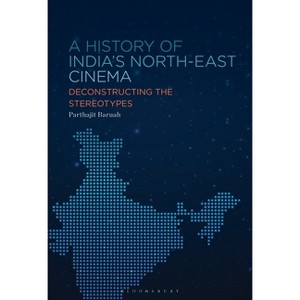
A History of India's North-East Cinema - by  Parthajit Baruah (Paperback) - 1 of 1

A History of India's North-East Cinema - by Parthajit Baruah (Paperback)

New at  target 
$39.99

In Stock

Free & easy returns
Free & easy returns
Return this item by mail or in store within 90 days for a full refund.
Eligible for registries and wish lists

About this item

Highlights

  • A History of India's North-East Cinema: Deconstructing the Stereotypes, the first book on the history of cinema in this region, depicts the journey from the first Assamese film, Joymoti (1935), to the present time.
  • About the Author: Parthajit Baruah is a senior lecturer at Renaissance Junior College, (Assam), India, film historian, and film practitioner.
  • 336 Pages
  • Performing Arts, Film

Description


About the Book


A depiction of the journey from the first Assamese film, Joymoti (1935), to the present time in India's North-Eastern regions.


Book Synopsis


A History of India's North-East Cinema: Deconstructing the Stereotypes, the first book on the history of cinema in this region, depicts the journey from the first Assamese film, Joymoti (1935), to the present time.

This book addresses the peripheral status and identity crisis of North-Eastern people in mainland India, a region that comprises eight states, and examines the role of Bollywood in the construction and misrepresentation of this region in popular Hindi cinema.

The book is divided into three parts. Part I looks at how the people of the North-East are constructed as 'foreigners' or 'outsiders' by mainland Indians, due to their physical facial features. Part II discusses the socio-political and cultural shifts in the region of Assam, the issue of Assamese identity which led to the Assam Movement and the upsurge of the insurgent group United Liberation Front of Assam (ULFA). It provides a nuanced discussion on the background and foreground of the first and second Assamese films, Joymoti (1935) and Indramalati (1939). Part III traces the journey of cinema in the seven other North-Eastern states-Manipur, Meghalaya, Arunachal Pradesh, Nagaland, Mizoram, Tripura and Sikkim, narrating the regions' socio-political phenomena and the unique cultural discourses. For instance, one of the chapters examines the turbulent period beginning with the Armed Forces (Special Powers) Act (AFSPA) and its impact on the growth of cinema in the region.

The book contains a rare collection of film posters, newspaper advertisements, photographs, letters and other documents, representing both the public and private domain of film-making.


Review Quotes


"This pioneering effort will help build up a comprehensive picture of India's North-East cinema. This deeply researched book goes beyond countering the prejudices by offering authentic discussion on landmark films from the eight states in one place. This chronicle is imbued with history, culture, politics and economics and creates a spectrum of the cinematic culture of the region. This is a valuable contribution to the study of Indian cinema." --Anil Zankar, Filmmaker, Writer, and Visiting Faculty, Indian Institute for Science Education and Research, Pune, India

"Parthajit Baruah's A History of India's North-East Cinema is an important study of cinema of Assam and the seven North-Eastern states of India. It addresses the conspicuous absences of historical analyses of 'North-East' cinema within the frame of Indian cinemas, presents a thorough overview of socio-political contexts, and puts the spotlight on films which are either disregarded or not known." --Madhuja Mukherjee, Professor, Department of Film Studies, Jadavpur University, India


About the Author


Parthajit Baruah is a senior lecturer at Renaissance Junior College, (Assam), India, film historian, and film practitioner. He has authored several academic books on films, including The Cinema of Adoor Gopalakrishnan (2016) and research projects on Assamese cinema at the National Film Archive of India. Baruah has made thirteen documentaries and one fiction feature film (The Nellie Story, 2023) on socio-political issues.
Dimensions (Overall): 9.0 Inches (H) x 6.0 Inches (W) x .69 Inches (D)
Weight: .98 Pounds
Suggested Age: 22 Years and Up
Number of Pages: 336
Genre: Performing Arts
Sub-Genre: Film
Publisher: Bloomsbury Academic
Theme: History & Criticism
Format: Paperback
Author: Parthajit Baruah
Language: English
Street Date: July 23, 2026
TCIN: 1012257595
UPC: 9798765127650
Item Number (DPCI): 247-37-2210
Origin: Made in the USA or Imported
If the item details aren’t accurate or complete, we want to know about it.

Shipping details

Estimated ship dimensions: 0.69 inches length x 6 inches width x 9 inches height
Estimated ship weight: 0.98 pounds
We regret that this item cannot be shipped to PO Boxes.
This item cannot be shipped to the following locations: American Samoa (see also separate entry under AS), Guam (see also separate entry under GU), Northern Mariana Islands, Puerto Rico (see also separate entry under PR), United States Minor Outlying Islands, Virgin Islands, U.S., APO/FPO, Alaska, Hawaii

Return details

This item can be returned to any Target store or Target.com.
This item must be returned within 90 days of the date it was purchased in store, delivered to the guest, delivered by a Shipt shopper, or picked up by the guest.
See the return policy for complete information.

Additional product information and recommendations

Discover more options

Skip to next section

Best-selling All Book Genres

Skip to next section

Get top deals, latest trends, and more.