Target New ArrivalsBack to SchoolCollegeClothing, Shoes & AccessoriesHome & DecorKitchen & DiningOutdoor Living & GardenGroceryHousehold EssentialsBabyBeautyPersonal CareSports & OutdoorsHealthWellnessSchool & Office SuppliesToys & GamesElectronics & TechVideo GamesMovies, Music & BooksParty SuppliesGift IdeasGift CardsPetsUlta Beauty at TargetShop by CommunityTarget OpticalDealsClearanceNew ArrivalsBack to SchoolCollegeTop DealsTarget Circle DealsWeekly AdShop Order PickupShop Same Day DeliveryRegistryRedCardTarget CircleFind Stores
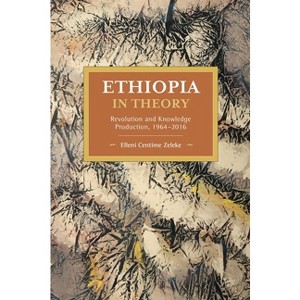
Ethiopia in Theory - (Historical Materialism) by  Elleni Centime Zeleke (Paperback) - 1 of 1

Ethiopia in Theory - (Historical Materialism) by Elleni Centime Zeleke (Paperback)

$30.99

In Stock

Free & easy returns
Free & easy returns
Return this item by mail or in store within 90 days for a full refund.
Eligible for registries and wish lists

About this item

Highlights

  • Between the years 1964 and 1974, Ethiopian post-secondary students studying at home, in Europe, and in North America produced a number of journals.
  • About the Author: Elleni Centime Zeleke, Ph.D (2016), is Assistant Professor in the Department of Middle Eastern, South Asian and African Studies at Columbia University in the City of New York.
  • 281 Pages
  • History, Africa
  • Series Name: Historical Materialism

Description


About the Book


A wide-ranging and compelling account of the interplay between social theory and social change in the Ethiopian student movement, and its enduring impact.


Book Synopsis


Between the years 1964 and 1974, Ethiopian post-secondary students studying at home, in Europe, and in North America produced a number of journals. In them, these students explored the relationship between social theory and social change within the project of building a socialist Ethiopia. Ethiopia in Theory examines the literature of this student movement, together with the movement 's afterlife in Ethiopian politics and society, in order to ask a vital question: what does it mean to write today about the appropriation and indigenisation of Marxist and mainstream social science ideas in an Ethiopian and African context? And, further, what does the archive of revolutionary thought in Africa teach us about the practice of critical theory more generally?


Review Quotes


"Ethiopia in Theory does not just tell, it shows [...] The author places herself centre-stage for readers to observe universal theory grow from her embodied, situated knowledge."
--Arash Davari, Radical Philosophy


"Elleni Centime Zeleke's new book is a profound, cross-disciplinary meditation on the naature and reverberations of a revolution - and on what it means to be human."
--Michael Kebede, Review of African Political Economy


"Ethiopia in Theory helps us navigate the silences and repressed narratives that erupt in times of war."
--Biruk Terrefe, Journal of Development Studies


"Written by a daughter of an Ethiopian family who were forced to emigrate their country due to the politics of the late 1970s, the book is both a solid account of Ethiopian student movement and its lasting legacies as well as a memoir grappling to understand what is lost and gained in times of turmoil."
--Tekeste Negash, author of Eritrea and Ethiopia: The Federal Experience


"Ethiopia in Theory is a thought-provoking original work that pushes disciplinary boundaries. It is bold in its theoretical and epistemological grounding, and emancipatory in its practical implications."
--Namhla Thando Matshanda, Africa


"Zeleke's contribution to Marxist scholarship is a revolutionary critique of revolutionary practice that centres Africa as a site of knowledge production; more precisely, she looks to recent Ethiopian history to draw lessons for all critical thinkers."
--Susan Dianne Brophy, Historical Materialism


"Ethiopia in Theory deserves the widest readership. First for its recovery of the intellectual and political enterprise of the last three Ethiopian generations through a dazzling method at once archival, literary, and auto/ethnographic. Second for illuminating a dark space in Twentieth-century global history: how intellectuals outside Europe, or in diasporas, put Marxism and 'Western' social sciences to work. Historians of elsewhere in the Tricontinent will find a valuable lens in this portrait of the intellectual origins, climax and aftermaths of the Ethiopian Revolution. For it was not just in Ethiopia that the emancipatory promise of c. 1960 collapsed through its own contradictions and yet, like the anchor to a blues chord, stubbornly persists."
--Richard Drayton, author of Nature's Government: Science, Imperial Britain, and the "Improvement" of the World


"Political research on the period from roughly 1966 to the mid-1970s often fail to articulate the global dimensions of student movements in African countries. This much-overdue study of the Ethiopian example offers, with nuance, rich historical evidence, and wonderfully clear prose, the revolutionary situation in which, as its author Elleni Centime Zeleke aptly puts it, the bandit is transformed into 'a guerilla or leader.' In response to those who cry 'illiberalism, ' this work reveals an alignment with other movements of what is at times called 'the black radical tradition' through which the response, echoed with explanatory force and defiance through the corridors of history, is that those at the bottom cannot and should not wait. As such, this extraordinary book also illuminates the complexity, strengths, and shortcomings of revolutionary forms of knowledge and praxis in Afro-modernity."
--Lewis R. Gordon, author of What Fanon Said


"An original and pathbreaking study of the ideology and the intellectual traditions that informed the Ethiopian revolution of 1974. Ethiopia in Theory provides sophisticated analysis of the ideas of the Ethiopian student movement of the 1960s and the way in which these ideas have continued to shape state policies in contemporary Ethiopia. This meticulously researched book offers a unique perspective for the study of revolutions and the socialist experience in Africa as well as the process of local knowledge production. It will undoubtedly appeal to a wide range of scholars beyond the field of African studies."
--Ahmad Sikainga, author of City of Steel and Fire: A social History of Atbara, Sudan's Railway Town, 1906-1984


"In Ethiopia in Theory, Elleni Centime Zeleke imaginatively transgresses disciplinary boundaries to offer a rendering of the 1974 Ethiopian revolution that is part memoir, part historical ethnography, part political theory. [...] Zeleke's rich engagement with the Ethiopian student movement serves as a critical reminder of the plurality of black geographies of struggle, and it is precisely this plurality that is generative of new memories, and new imaginations of the future."
--Samar Al-Bulushi, H-Net Reviews


"In attuning us to the constitution of social science as an ideological and political battlefield, Zeleke offers a model of how we might map the global Third World efforts to indigenize social theory in service of social transformation."
--Adom Getachew, author of Worldmaking after Empire


"The book offers a reading of what it means to be human in a world that has been made by the social sciences. [...] In order to appreciate the political imperative, epistemic elaboration, and the social ramifications of this social science project, one must be willing to step outside of it, to make an account of it and to tell its story. This, in effect, is what Zeleke does with great care, rigor, and urgency."
--Wendell Marsh, H-Net Reviews


"Elleni's notable contribution with this book is in showing the lasting legacy of the student movement."
--Hewan Semon Marye, Aethiopica


"This superb book will transform all discussions concerning the production of knowledge. Ranging through the archives, moving across philosophy and critical theory, and traversing social history, Ethiopia in Theory frames a stunningly original account of the Ethiopian student movement of the 1960s and '70s as a site for the production of radical social science. Rather than the mere reception of revolutionary theory in an African context, Zeleke shows us the dynamics of its generation. There is truly nothing in the literature that comes close to the depth of this multi-leveled, interdisciplinary study. Zeleke 's outstanding book deserves the widest possible readership in social history, African studies, post-colonial analysis, and Marxist and critical theory in general."
--David McNally, Cullen Distinguished Professor of History, University of Houston, author of Monsters of the Market: Zombies, Vampires and Global Capitalism


About the Author


Elleni Centime Zeleke, Ph.D (2016), is Assistant Professor in the Department of Middle Eastern, South Asian and African Studies at Columbia University in the City of New York. Her previous work has been published by the Journal of North East African Studies and Callaloo: A Journal of African Diaspora Arts and Letters.

Dimensions (Overall): 8.9 Inches (H) x 6.0 Inches (W) x .6 Inches (D)
Weight: .9 Pounds
Suggested Age: 22 Years and Up
Number of Pages: 281
Genre: History
Sub-Genre: Africa
Series Title: Historical Materialism
Publisher: Haymarket Books
Theme: East
Format: Paperback
Author: Elleni Centime Zeleke
Language: English
Street Date: November 3, 2020
TCIN: 1010330609
UPC: 9781642593419
Item Number (DPCI): 247-08-9453
Origin: Made in the USA or Imported
If the item details aren’t accurate or complete, we want to know about it.

Shipping details

Estimated ship dimensions: 0.6 inches length x 6 inches width x 8.9 inches height
Estimated ship weight: 0.9 pounds
We regret that this item cannot be shipped to PO Boxes.
This item cannot be shipped to the following locations: American Samoa (see also separate entry under AS), Guam (see also separate entry under GU), Northern Mariana Islands, Puerto Rico (see also separate entry under PR), United States Minor Outlying Islands, Virgin Islands, U.S., APO/FPO, Alaska, Hawaii

Return details

This item can be returned to any Target store or Target.com.
This item must be returned within 90 days of the date it was purchased in store, delivered to the guest, delivered by a Shipt shopper, or picked up by the guest.
See the return policy for complete information.

Additional product information and recommendations
Discover more options

Skip to next section

Guests also viewed

Skip to next section

Get top deals, latest trends, and more.