Target New ArrivalsBack to SchoolCollegeClothing, Shoes & AccessoriesHome & DecorKitchen & DiningOutdoor Living & GardenGroceryHousehold EssentialsBabyBeautyPersonal CareSports & OutdoorsHealthWellnessSchool & Office SuppliesToys & GamesElectronics & TechVideo GamesMovies, Music & BooksParty SuppliesGift IdeasGift CardsPetsUlta Beauty at TargetShop by CommunityTarget OpticalDealsClearanceNew ArrivalsBack to SchoolCollegeTop DealsTarget Circle DealsWeekly AdShop Order PickupShop Same Day DeliveryRegistryRedCardTarget CircleFind Stores
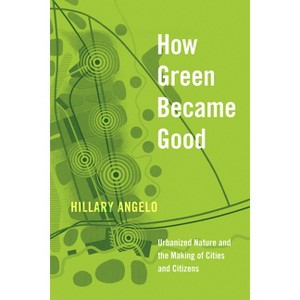
How Green Became Good - by  Hillary Angelo (Hardcover) - 1 of 1

How Green Became Good - by Hillary Angelo (Hardcover)

$115.00

In Stock

Free & easy returns
Free & easy returns
Return this item by mail or in store within 90 days for a full refund.
Eligible for registries and wish lists

About this item

Highlights

  • As projects like Manhattan's High Line, Chicago's 606, China's eco-cities, and Ethiopia's tree-planting efforts show, cities around the world are devoting serious resources to urban greening.
  • Author(s): Hillary Angelo
  • 264 Pages
  • Social Science, Sociology

Description


About the Book


"As projects like Manhattan's High Line, Chicago's 606, and Atlanta's Beltline show, major cities are devoting serious resources to cultivating urban green spaces. These formerly neglected urban spaces now draw huge crowds thanks to the considerable efforts of city governments. But why are these greening projects so widely taken up, and what good do they do? In How Green Became Good,Hillary Angelo uncovers the origins and meanings of the enduring appeal of urban green spaces, showing that city planners have long thought that creating green spaces would lead to social improvements. Turning to Germany's Ruhr valley (a region that, despite its ample open space, was "greened" with the addition of official park and gardens), Angelo shows that greening is as much a social process as a physical one. She turns to three distinct moments in the twentieth-century Ruhr valley's history that inspired the creation of new green spaces: industrialization that took hold in the early twentieth century, the new democratic ideals of the 1960s, and industrial decline beginning in the early 1990s.Across these distinct historical moments, Angelo shows that the impulse to create green space has persistently arisen as a response to a host of social changes. Ultimately, however, the creation of urban green space is more about how we imagine social life than about the good it imparts. Instead, the impulse to bring nature into urban life reveals an enduring conviction that green space will transform us into ideal citizens in an ideal society"


Book Synopsis


As projects like Manhattan's High Line, Chicago's 606, China's eco-cities, and Ethiopia's tree-planting efforts show, cities around the world are devoting serious resources to urban greening. Formerly neglected urban spaces and new high-end developments draw huge crowds thanks to the considerable efforts of city governments. But why are greening projects so widely taken up, and what good do they do? In How Green Became Good, Hillary Angelo uncovers the origins and meanings of the enduring appeal of urban green space, showing that city planners have long thought that creating green spaces would lead to social improvement. Turning to Germany's Ruhr Valley (a region that, despite its ample open space, was "greened" with the addition of official parks and gardens), Angelo shows that greening is as much a social process as a physical one. She examines three moments in the Ruhr Valley's urban history that inspired the creation of new green spaces: industrialization in the late nineteenth century, postwar democratic ideals of the 1960s, and industrial decline and economic renewal in the early 1990s. Across these distinct historical moments, Angelo shows that the impulse to bring nature into urban life has persistently arisen as a response to a host of social changes, and reveals an enduring conviction that green space will transform us into ideal inhabitants of ideal cities. Ultimately, however, she finds that the creation of urban green space is more about how we imagine social life than about the good it imparts.


Review Quotes


"These interventions deserve wide reading by all sociologists, not just urban sociologists or environmental sociologists."-- "American Journal of Sociology"

"Interested in how planning projects, specifically those sold as 'green, ' can exacerbate or ignore existing inequalities. . . Angelo's more specific question is why have all types of cities taken up 'greening' projects
rather than just large, industrial cities? . . . Taken on their own terms, these projects have been remarkable successes, ecologically and economically, but Angelo's point is clear: the 'greening' at the core of their
conceptions has blunted social criticism. . ."-- "Journal of Urban Affairs"

"How Green Became Good is a powerful work of urban sociology, culture, and historical and comparative methods. In it, Hillary Angelo challenges conventional accounts of why urban greening became a public good."-- "Social Forces"

"How Green Became Good is an exceptionally robust work of historical sociology, shown by the fact that Angelo not only provides the reader with the historical specifics of each greening project analyzed in the book, but also uses those details to skillfully build a general theoretical explanation for how urban greening works as a social process. . . . Angelo's work serves as a model for other scholars inclined to take a historical approach to answering question sin urban sociology and urban studies."-- "Urban Studies"

"How Green Became Good takes the conventional western urban imagination out of Chicago's Loop and past Los Angeles's Sixty-Mile-Circle to the expanse of the Ruhr and rewrites urban theory from there. This brilliant book on more than a century of "urbanized nature" in Germany's former industrial heartland will forever change our views of the industrial city as preceding the green city. If you are looking for a concept of the urban beyond the Zwischenstadt, you will find it in Angelo's magisterial contribution."--Roger Keil, York University

"Angelo risks sacrilege; she takes on nature as a mundane tool of politics, entertainment, and real estate. The ideology of green comes out of its black box, exposed to insightful and historically aware analysis."--Harvey Molotch, New York University

"Written with verve and meticulous attention to historical detail, How Green Became Good illuminates the hows and whys of the contemporary phenomenon of 'urbanized nature.' Angelo convincingly moves from micro-level investigations of moral judgments and responses surrounding pet rabbits to macro-level examinations of top-down globalized urban greening projects. A tour de force, this book will prompt a rethinking of the green-as-good reflex."--Robin Wagner-Pacifici, The New School for Social Research
Dimensions (Overall): 9.0 Inches (H) x 6.0 Inches (W) x .63 Inches (D)
Weight: 1.16 Pounds
Suggested Age: 22 Years and Up
Number of Pages: 264
Genre: Social Science
Sub-Genre: Sociology
Publisher: University of Chicago Press
Theme: Urban
Format: Hardcover
Author: Hillary Angelo
Language: English
Street Date: March 15, 2021
TCIN: 1010130841
UPC: 9780226738994
Item Number (DPCI): 247-18-6451
Origin: Made in the USA or Imported
If the item details aren’t accurate or complete, we want to know about it.

Shipping details

Estimated ship dimensions: 0.63 inches length x 6 inches width x 9 inches height
Estimated ship weight: 1.16 pounds
We regret that this item cannot be shipped to PO Boxes.
This item cannot be shipped to the following locations: American Samoa (see also separate entry under AS), Guam (see also separate entry under GU), Northern Mariana Islands, Puerto Rico (see also separate entry under PR), United States Minor Outlying Islands, Virgin Islands, U.S., APO/FPO, Alaska, Hawaii

Return details

This item can be returned to any Target store or Target.com.
This item must be returned within 90 days of the date it was purchased in store, delivered to the guest, delivered by a Shipt shopper, or picked up by the guest.
See the return policy for complete information.

Additional product information and recommendations

Discover more options

Skip to next section

Frequently bought together

Skip to next section

Best-selling All Book Genres

Skip to next section

Get top deals, latest trends, and more.